gh-reloaded
Board dependency arrows
On a GitHub Projects Board (kanban) view, draws an arrow directly between any two currently-rendered cards where one blocks the other — so a dependency reads at a glance without opening either issue.
Off by default. A switch next to the view tabs — shown only while the selected view is actually a Board, since an arrow between two points doesn’t mean much anywhere else — turns it on/off, and the choice is remembered (and can also be flipped from Settings).
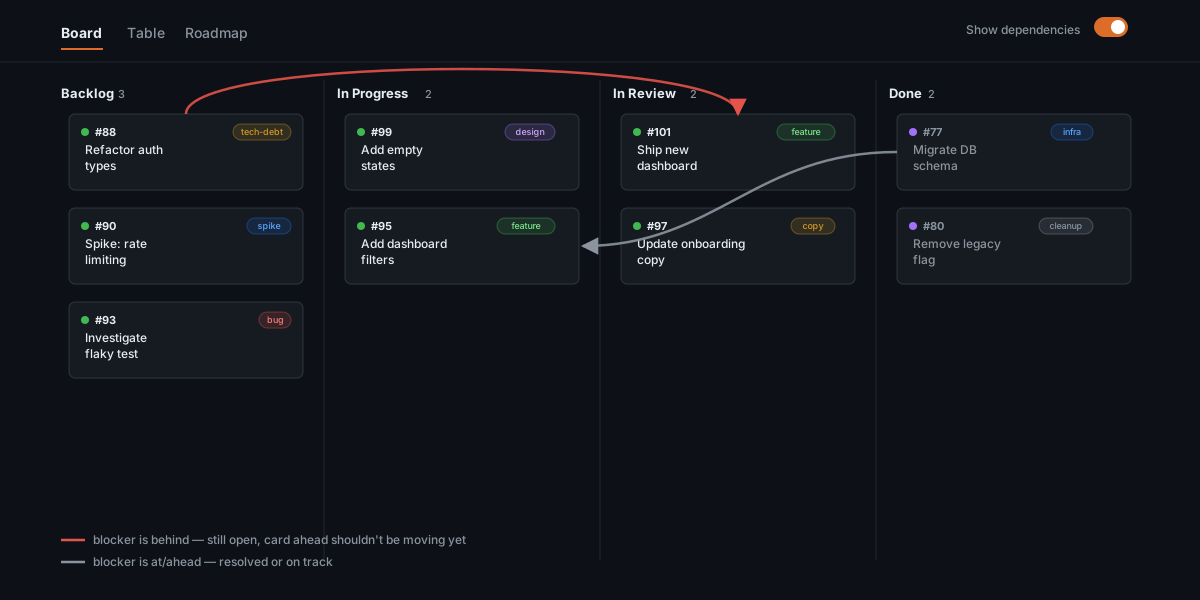
Mockup illustrating the layout and colors — not a literal screenshot.
What it does
- Finds every issue/PR link currently in the DOM — card discovery itself is layout-agnostic (just “any issue/PR link on the page right now”), but the switch that turns the feature on only appears on a Board view, detected from the selected view tab’s own icon.
- Asks the background for “blocked by” / “blocking” relationships (Issue Dependencies) among exactly those issues, and draws an arrow for every pair where both ends are currently on screen. A dependency pointing at an issue that isn’t rendered on the board at all is simply not drawn — unlike the issue-page dependency graph, there’s no placeholder “external” node here.
- Colors each arrow by whether the two cards’ columns are in the order they should be: gray when the blocker’s column is at or ahead of the card it blocks (or they’re in the same column), red when the blocker is actually behind the card it’s blocking — a sign that card is moving before its own blocker is resolved.
- Recomputes arrow positions on scroll, resize, and any DOM change (drag-and-drop, column collapse, filtering) so arrows track cards as they move; re-fetches the dependency data only when the set of visible cards actually changes.
Known limitations
- If a Projects view virtualizes off-screen cards (removes them from the DOM entirely rather than just hiding them), a dependency to/from one of those cards can’t be drawn until it’s scrolled into view.
- The red/gray coloring reads column order from each card’s on-screen horizontal position, not from the Status field’s configured order directly — accurate for a standard left-to-right Board, but meaningless on a layout that doesn’t lay columns out that way.
- Card anchoring climbs from the issue link to the nearest ancestor that isn’t obviously wider than one card; resilient to most markup churn, but can occasionally anchor a little loosely on an unfamiliar layout.
- Every visible card costs two API calls (blocked-by, blocking), same as the issue-page dependency graph; the shared 60s response cache in
lib/github-api.jskeeps a burst of re-renders (scrolling, dragging) from re-hitting the API each time.